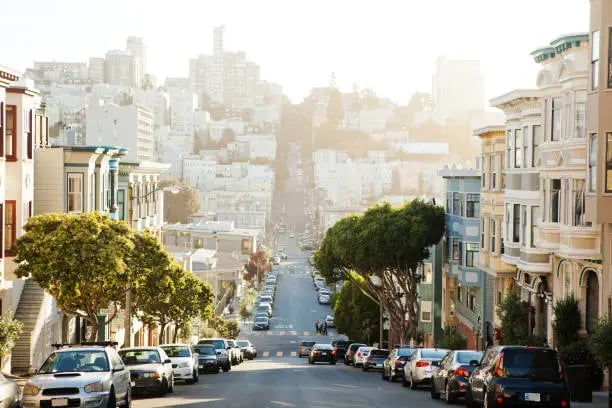
San Francisco's multifamily market is standing out from the rest of the country in 2026, outperforming on nearly every key metric as limited supply and strong renter demand continue to work in landlords' favor.
Rent Growth Leading the Nation
Rent growth in San Francisco is forecast to reach 5.2 percent by year-end 2026, the second-highest rate among major U.S. markets. The average effective rent is expected to hit $3,270 per month, driven by gains of roughly 6 percent in San Francisco County and 4 percent in San Mateo County. The strongest performance is concentrated in urban core submarkets, where Class A rent growth exceeded 13 percent year-over-year in neighborhoods like SoMa, Mission Bay, Richmond-Western Addition, and Downtown San Francisco. Tech-sector tailwinds continue to bring high-paying jobs back to the city, fueling demand for premium apartments and pushing rents higher across the board.
Vacancy at Historic Lows
Metrowide vacancy is forecast to sit at just 3.5 percent by year-end, down 30 basis points year-over-year. San Francisco never experienced the post-pandemic supply surge that hit Sun Belt markets, which means demand has steadily outpaced new openings for years. The CBD, which struggled during the pandemic, is now seeing vacancy rates in the 3 percent range following a 160-basis-point drop in 2025 alone. Class B and C properties across most San Mateo County submarkets are also posting vacancy at or below 3 percent.
Construction Pipeline Remains Extremely Thin
Only 1,400 units are expected to be added to the metro's inventory in 2026, representing just a 0.5 percent increase, one of the lowest expansion rates in the country. This year's delivery slate will be the smallest in the metro since 2012, with new supply largely concentrated in San Mateo County while San Francisco County sees minimal additions. With net absorption expected to outpace completions for the fifth consecutive year, there is little near-term relief in sight for renters, but strong tailwinds for property owners.
Investment Activity Surging
Transaction volume in San Francisco jumped roughly 40 percent in the 12 months ended in March 2026, outpacing most major U.S. metros and even surpassing 2022 levels when low borrowing costs were driving deals nationwide. Sales activity nearly doubled in core San Francisco submarkets including Downtown, Haight-Ashbury, Richmond-Western Addition, and Marina-Pacific Heights, as investors focus on high-income neighborhoods with constrained land supply.
After four straight years of declining average price per unit from 2021 to 2024, the trend reversed in 2025 and is expected to post meaningful growth in 2026. Cap rates reached 5.2 percent in the year ended March, the highest level since 2011, offering investors more durable income yields than the market has seen in over a decade.
San Mateo County: Steady and Reliable
While the City of San Francisco is seeing the most dramatic rent growth, San Mateo County continues to offer stable, consistent performance. Submarkets like San Mateo-Burlingame, Redwood City-Menlo Park, and Foster City posted rent growth around 4 percent year-over-year, while South San Francisco-San Bruno-Millbrae exceeded 6 percent. Transit-oriented corridors in San Mateo County continue to trade actively, supported by spillover demand from major Bay Area employment hubs.
The Bottom Line
San Francisco's multifamily market is in a strong position heading into the second half of 2026. Limited supply, falling vacancy, accelerating rent growth, and rising transaction volume all point to a market that is gaining momentum, not losing it. For investors focused on the Bay Area, the fundamentals have rarely looked this compelling.
Sources: Marcus & Millichap Research Services; Bureau of Labor Statistics; CoStar Group, Inc.; Real Capital Analytics; RealPage, Inc.
