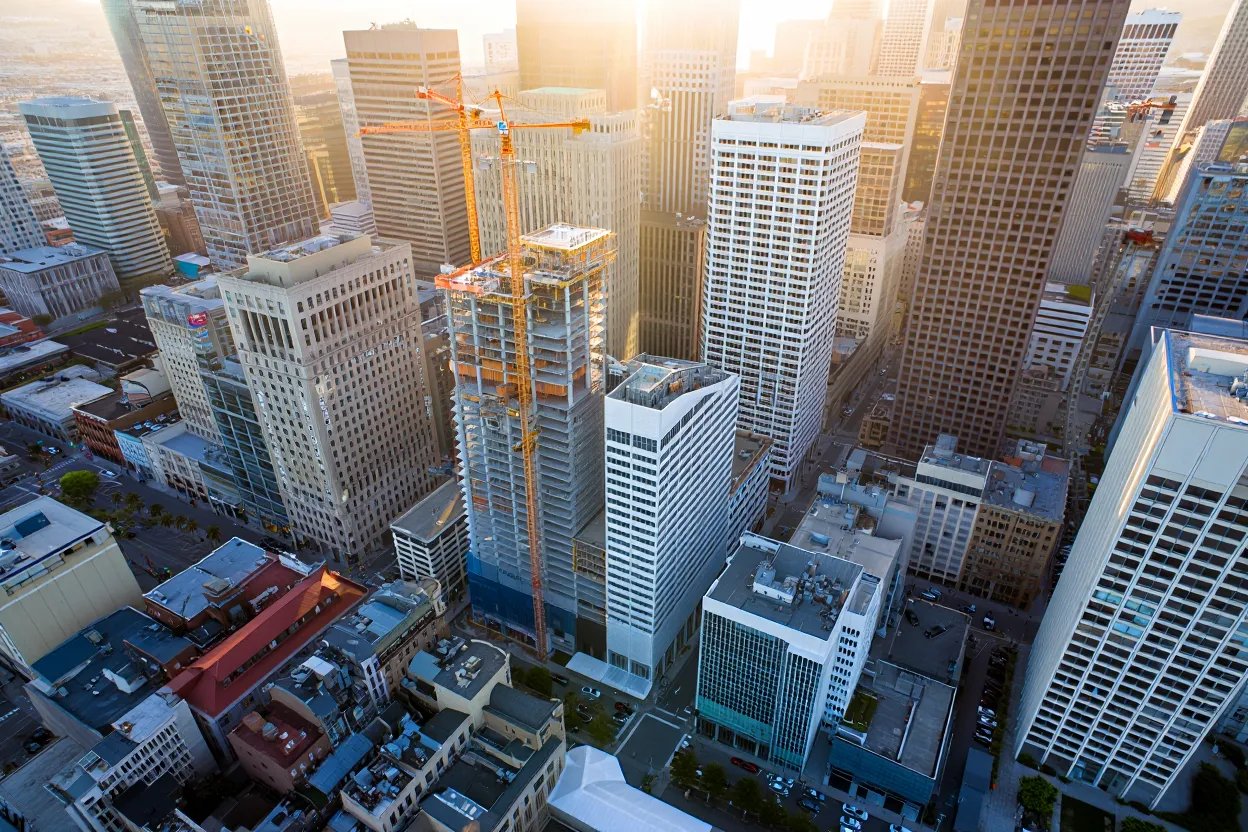
Everyone is reading the wrong half of the San Francisco story
Every market recap this summer leads with the same headline: artificial intelligence companies are taking over San Francisco office leasing. It is a real story and the numbers support it. It is also, if you own an apartment building in this city, the least useful half of the picture.
The half that matters shows up on the residential side. And it is moving faster than the office numbers are.
The office recovery, briefly
Newmark put San Francisco office vacancy at 26.4% in the second quarter of 2026, down 360 basis points from a year earlier and 150 basis points from the prior quarter. Leasing activity hit 3.3 million square feet, the second strongest quarter since 2019, putting the market on pace for roughly 15 million square feet this year. Average asking rent rose about 3% in the quarter to $69.86 per square foot, the first quarterly gain above 1% in six years.
The deals behind those numbers are names you already know. The City and County of San Francisco took roughly 502,000 square feet at 1455 Market Street. Anthropic signed 241,628 square feet at 500 Howard. Brex took the full building at 270 Brannan, 215,374 square feet. OpenAI subleased roughly 280,000 square feet at 1800 Owens Street in Mission Bay, pushing its city footprint past one million square feet.
One caution before anyone repeats a vacancy figure in a pitch. CoStar, Newmark, CBRE and Cushman & Wakefield all publish different San Francisco office vacancy rates, and the spread between them can run five or six percentage points, because each firm counts a different inventory base. If you cite a number, cite the house it came from. I have watched brokers lose credibility in a room over exactly this.
The rent numbers are the actual headline
Apartment List has San Francisco median asking rent at $3,714 as of August 2026, with one bedrooms at $3,750 and two bedrooms at $4,444. Their year over year figure is 23.1%, and they show San Francisco ranked first among the 100 largest U.S. cities for monthly rent growth in every single month of 2026.
Treat that 23.1% carefully, because it is not the number a lender or an appraiser is going to underwrite. Newmark and Apartments.com data reported by Bisnow put first quarter 2026 rent growth closer to 8.4%, with average rent at $3,429 and occupancy at 96.3%. Both figures can be accurate at the same time. Apartment List measures new lease asking rents on its own platform, which turns over fastest and overstates in a tightening market. Stabilized effective rent moves slower.
The honest read is that San Francisco effective rents are growing somewhere in the high single digits to low double digits, and that even the conservative version is the strongest performance in the country at a moment when national rent growth is close to flat. That is the number I would put in front of an owner, not the splashy one.
The spillover across the bay and down the Peninsula is real too. Apartment List shows Oakland up roughly 13%, Mountain View up 11% and San Jose up 6.4% over the same period.
Supply is the constraint nobody can solve in this cycle
Here is the part that separates this run from 2015 and 2021. There is almost no new product coming.
Newmark counted roughly 300 market rate apartment units under construction in San Francisco, the thinnest pipeline in fifteen years. Developers interviewed on the topic have said rents would need to climb another 20% to 30% before ground up multifamily construction pencils at scale in the city, given current construction costs, insurance and the cost of capital.
Read that plainly. Demand is being created by a hiring wave in the highest paying industry in the region, and the supply response is roughly fifteen years from being adequate. Vacancy in the city is reported near the low single digits, and time to lease has compressed to about sixteen days against a national average closer to thirty.
Existing buildings are the only supply. That is the whole thesis.
So why did apartment sales volume actually fall?
This is the question I would ask any broker who is only telling you the bullish half.
San Francisco multifamily investment sales totaled about $1.28 billion in the first half of 2026, down from roughly $1.56 billion in the first half of 2025. That is an 18% decline in volume during the strongest rent growth environment in the country.
That gap is not a contradiction. It is a bid ask problem, and it tells you more about where we are in the cycle than the rent chart does. Owners are marking their buildings to the new rent roll and to where they believe rents go in 2027. Buyers are underwriting to today's in place income, today's debt costs and today's insurance quotes. When the seller prices the future and the buyer prices the present, deals stall.
Two things eventually close that gap. Either in place rents catch up to what owners already believe the building is worth, which is happening one lease renewal at a time, or debt gets cheaper and buyers can pay the seller's number. Whichever arrives first sets the timing of the next transaction wave.
If you own here, that is the practical takeaway. The value is real, but the liquidity is not fully there yet, and those are different things.
What I would actually be doing if I owned Bay Area apartments right now
Rebuild the rent roll before you rebuild the pitch. A building trading on trailing income in this market is leaving real money behind. Every unit that turns at market resets the basis for the whole asset.
Know your regulatory exposure cold. San Francisco rent control means the gap between your in place rents and market rents is an asset that only converts on turnover, and buyers price that gap very differently depending on tenancy length and unit mix. A building with long tenured tenancies and a building with recent turnover can show the same gross potential rent and trade at meaningfully different numbers.
Stress test the concentration risk. Roughly the entire demand story runs through one industry. If AI hiring cools, San Francisco has been here before, in 2001 and again in 2022. That is not a reason to sit out. It is a reason to know what your building looks like at a 10% lower rent assumption before you sign anything.
Get a current value opinion even if you are not selling. The last credible number most owners have on their building is from a very different market.
Common questions
Are San Francisco apartment rents really up 23%?
Asking rents on new leases are, by Apartment List's measure. Stabilized effective rents, which is what lenders and appraisers use, are growing closer to the high single digits. Both are strong. Only one is bankable.
Is now a good time to sell a Bay Area apartment building?
It depends almost entirely on your rent roll and your debt maturity, not on the market headline. Buildings with recent turnover and market rents in place are drawing real competition. Buildings with deep rent control gaps and trailing income are seeing wider bid ask spreads.
Will new construction bring rents back down?
Not in this cycle. With roughly 300 market rate units under construction in San Francisco and rents needing to rise another 20% to 30% before new development pencils, meaningful new supply is years away.
The bottom line
The AI office story is being covered exhaustively by every brokerage in the city. The apartment story underneath it is bigger, tighter and far less crowded, and it is the one that actually determines what your building is worth.
If you own five or more units anywhere in the Bay Area and you want a straight read on where your asset sits today, including the parts of it that are not favorable, I am happy to put one together.
Sources: Newmark San Francisco Office Market Report, Q2 2026; Apartment List San Francisco Rent Report, August 2026; Newmark and Apartments.com multifamily data reported by Bisnow, June 2026; CoStar San Francisco multifamily investment sales summary, first half 2026. Figures were current as of publication and vary by data provider methodology.
Philip Batlin is Managing Director Investments at Marcus & Millichap in San Francisco, specializing in apartment building sales throughout the Bay Area. License CA 01873218.
