The Federal Reserve raised rates again in September, and the effects are already showing up in the apartment market. Mortgage rates are back above 7 percent, new construction keeps slowing, and more renters are choosing to stay put. For owners of apartment buildings in San Francisco and across the Bay Area, that mix creates both opportunity and pressure. Here is what the latest Marcus & Millichap Research Services data shows and how I am reading it for our market.
Higher Mortgage Rates Are Keeping Renters in Their Units
The September hike moved the federal funds target range to 3.75 to 4.00 percent, and the Fed has left the door open to another increase if inflation holds up. The average 30 year mortgage rate topped 7 percent in mid September. That cuts purchasing power for first time buyers and keeps homeowners with low rate loans from moving.
The result is longer renter tenure. Lease renewals climbed to 57.6 percent in September, more than 5 percentage points above the 2015 to 2019 average. Higher retention means lower turnover costs and steadier occupancy. The caution: tighter financial conditions can slow hiring and household formation, which could cap how fast rents grow.
The Construction Pipeline Keeps Shrinking
Seasonally adjusted residential permits in August were still more than 25 percent below their early 2022 peak, and completions fell to the lowest level since late 2018. Higher rates raise the cost of acquisition, development and construction financing at a time when labor and materials are already expensive.
Homebuilders are working to keep sales moving. In September, 66 percent offered incentives such as mortgage rate buydowns and closing cost assistance, and 38 percent cut prices. Builder confidence still fell to a one year low, a sign those incentives are not fully offsetting weaker buyer demand.
In the Bay Area, where entitlement timelines and building costs were already among the highest in the country, fewer new deliveries generally work in favor of owners of existing, well located buildings.
What Higher Rates Mean for Apartment Values and Deal Flow
Financing is the pressure point. Higher rates reduce acquisition leverage and refinance proceeds, which can widen the gap between what sellers expect and what buyers can underwrite. The wave of maturing loans appears to be cresting, but multifamily debt coming due over the next year may push some owners to contribute more equity or sell rather than refinance a low rate loan at today's rates.
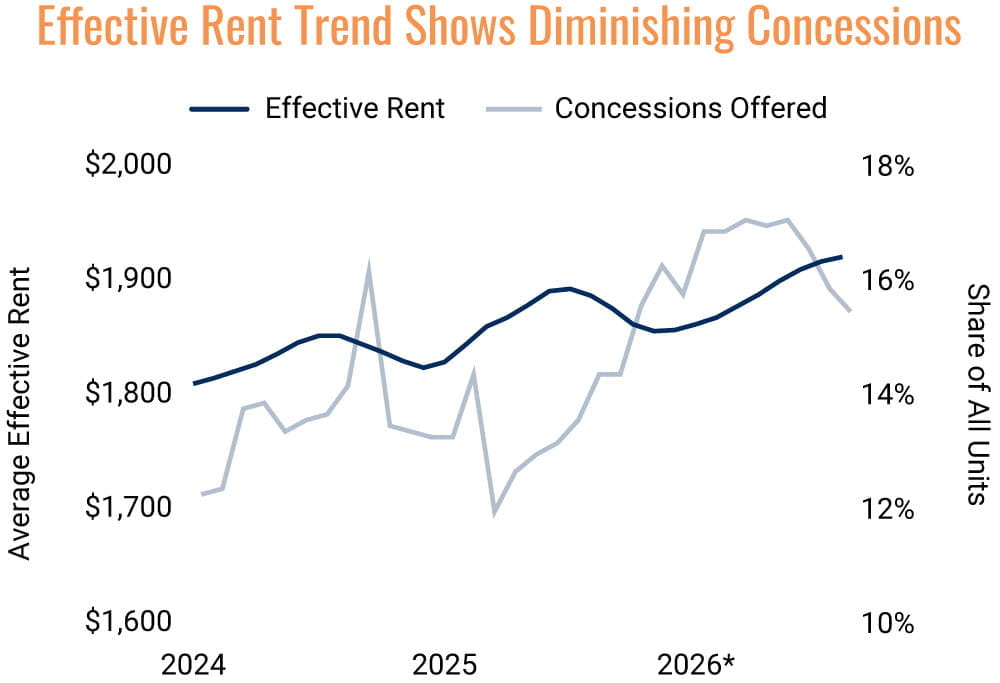
Operations are moving the other direction. Slower construction, fewer concessions and a ninth consecutive month of effective rent growth through August all point to stronger property level cash flow. If that holds, buyers gain confidence in future income, the gap between buyers and sellers should narrow, and transaction activity should pick up.
What Bay Area Rents Look Like Today
The national numbers understate what is happening here. San Francisco rents are climbing faster than any major market in the country, and the Peninsula is not far behind.
- San Francisco 1 bedroom: $4,400 median, up 25.4% year over year (Zumper, September 2026)
- San Francisco 2 bedroom: $6,340 median, the highest in the U.S., up 26.8% year over year (Zumper, September 2026)
- San Francisco, all listings: 1 bedroom $3,915 and 2 bedroom $4,640, up 25.7% year over year (Apartment List, October 2026)
- City of San Mateo: $3,933 overall median, up 10.4% year over year (Apartment List, October 2026)
- San Francisco metro: $3,017 overall median, up 12.3% year over year (Apartment List, October 2026)
Why two sets of numbers for San Francisco? Zumper tracks current listings, which lean toward newer buildings. Apartment List starts from Census data and measures rent changes on the same units over time, so it reads lower. Both point the same way: San Francisco rents are up roughly 25 percent in a year. Zumper ties the jump to AI hiring meeting very little new supply.
Mayor Lurie declared a rent emergency in September and has proposed a 10% cap on rent increases. How that plays out will matter for owners weighing their next move, and it is worth getting ahead of.
For owners of older apartment buildings, the gap between in place rents and today's market is often where the real upside sits when a unit turns over.
Key Takeaways for Apartment Investors
- Higher mortgage rates reinforce the lock in effect and extend how long renters stay.
- Residential permits remain more than 25 percent below their early 2022 peak, and completions are at their lowest level since late 2018.
- Higher debt costs and upcoming loan maturities may bring more apartment buildings to market, creating acquisition opportunities.
- Slower construction and fewer concessions point to improving performance at existing properties, which should help buyers and sellers meet on price.
Rate Snapshot
- 10 Year U.S. Treasury: 5.28% as of October 5, 2026
- 30 Year Mortgage Rate: 7.28% as of October 1, 2026
What This Means If You Own a Bay Area Apartment Building
If you have a loan maturing in the next 12 to 24 months, now is the time to run the numbers on refinancing versus selling. Rent growth and tighter supply support values, but higher debt costs change what buyers can pay. Knowing where your building stands today puts you in control of the decision instead of reacting to a lender's timeline.
I am happy to put together a complimentary opinion of value for your property. Reach me at 415.254.7071 or [email protected].
Sources: Marcus & Millichap Research Services; Moody's Analytics; National Association of Realtors; RealPage, Inc.; Freddie Mac; Mortgage Bankers Association; National Association of Home Builders; U.S. Census Bureau; U.S. Bureau of Economic Analysis; Zumper (September 2026); Apartment List (October 2026). National data through August unless otherwise noted.