The San Francisco Fire Sprinkler Retrofit Mandate stems from Ordinance File #220038 ("Fire Code - Automatic Sprinkler Requirements for Existing High-Rise Buildings"), introduced on January 11, 2022, by Supervisor Aaron Peskin and co-sponsored by Supervisors Connie Chan, Rafael Mandelman, Myrna Melgar, and Shamann Walton. It was adopted by the Board of Supervisors in late 2022 and incorporated into the repeal and re-enactment of the San Francisco Fire Code. Local amendments are now part of the 2025 San Francisco Fire Code, effective January 1, 2026.
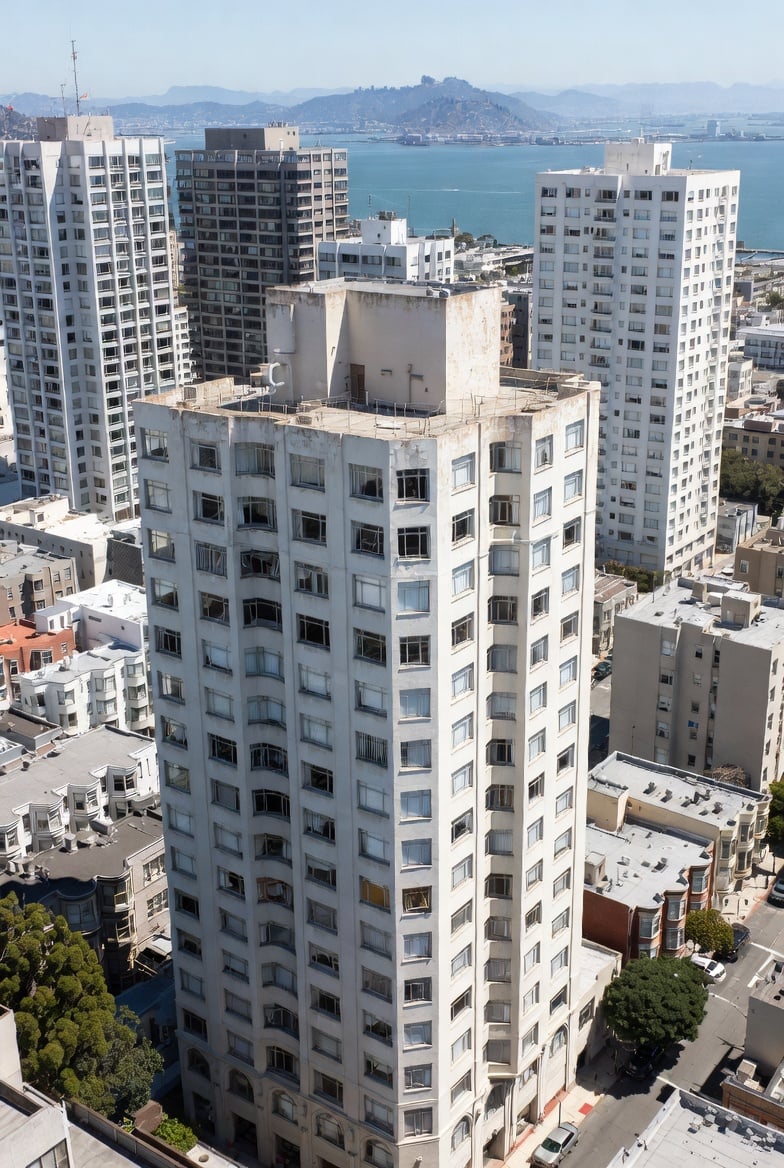
The mandate requires automatic sprinkler systems in every room of every unit in approximately 126 pre-1975 residential high-rise buildings (typically 12+ stories or occupied floors over ~120 feet, lacking two protected interior staircases with two-hour fire-rated walls), plus building-wide upgrades such as pumps, tanks, and piping.
The phased compliance timeline includes:
- Submit professionally designed drawings and obtain building permits (originally by 2027)
- Secure an approved reliable water supply (2031)
- Complete full installation and Fire Department approval (2035)
The ordinance aimed to close fire safety gaps in older concrete high-rises, extending protections similar to the 1993 commercial retrofit rule that largely exempted pre-1974 residential buildings.
Water Supply Challenges: Can Existing Lines Handle It?
A major hidden hurdle is that pre-1975 domestic water lines and infrastructure were never designed to support full-building automatic sprinklers—especially the high flow and pressure needed for unit-by-unit coverage across dozens of floors (per NFPA 13 standards referenced in the SF Fire Code).
- Existing systems often inadequate — Older high-rises rely on city street-main pressure for domestic plumbing, lacking capacity, redundancy, or booster capability for fire protection. Most buildings will need new dedicated fire-water systems, including fire pumps, on-site storage tanks (rooftop or basement), and backup generators.
- Specific complications — In hilly neighborhoods (Nob Hill, Russian Hill, Pacific Heights), connecting to city mains may require street excavation or major trenching. Prolonged water outages during tie-ins, plus potential asbestos/lead in aging pipes, add risk and expense. Some engineering reports have paused projects due to these issues.
- Who pays and who is responsible? — The burden falls entirely on building owners (via HOAs in condos). Owners must fund and manage all upgrades—new piping to city connections, pumps (~$100,000+ in many cases), tanks, generators, and any public-right-of-way work. The San Francisco Public Utilities Commission (SFPUC) does not cover or subsidize private building-side upgrades. The Fire Department enforces the requirement but offers no financial assistance.
These water-related upgrades often drive total costs far beyond initial sprinkler piping estimates.
Additional Construction Challenges in High-Rise Retrofits—and Union Contractor Factors
Retrofitting sprinklers in occupied, older concrete high-rises brings unique logistical and practical hurdles:
- Invasive work in concrete structures — Drilling/coring through thick slabs, floors, and ceilings is labor-intensive, requiring specialized tools and structural engineering. Asbestos abatement and lead paint removal trigger mandatory protocols, HEPA dust control, and phased demolition/restoration.
- Disruption in occupied buildings — Work proceeds unit-by-unit or floor-by-floor, creating prolonged noise, dust, vibrations, and water outages—especially hazardous for elderly residents. Temporary relocation (hotels/rentals for weeks/months per phase) is common, posing health risks and adding significant extra costs.
- Logistical high-rise issues — Limited elevator access often requires dedicated hoists/rigging. Tight unit spaces, furniture moving, and resident coordination extend timelines (potentially years for 12+ stories). Historic/landmark status in some towers adds preservation approvals.
- Union contractor dynamics — In San Francisco, fire protection work frequently involves union-signatory contractors (e.g., Sprinkler Fitters Local 483), meaning prevailing wage laws, certified journeyman requirements, and union rules apply. This ensures skilled labor but can inflate costs (higher wages/overtime), limit availability, and add administrative layers. Industry advocates note modern techniques allow occupied retrofits with minimal long-term displacement; opponents argue union involvement contributes to higher bids.
These challenges amplify displacement fears and cost variabilityHOA estimates often reach $200K–$300K+ per unit, while industry sources cite real bids at $5–$10 per square foot or $60K–$100K per unit with less-invasive methods.
Why This Hits Retired Residents Hardest
Many of these high-rises attracted long-term buyers professionals, teachers, public servants, or military retirees—who purchased when San Francisco real estate was more affordable. Now in their 70s, 80s, or 90s+, they rely on fixed incomes from pensions, Social Security, or modest savings.
- Massive one-time costs per unit — HOA projections frequently cite $200,000 to $300,000+ (sometimes higher), factoring in all elements.
- Ongoing monthly assessments — Many HOAs are imposing or planning $1,000–$3,000+ per month in special assessments—on top of existing HOA dues ($1,000–$2,000+ monthly). For retirees, this could double housing costs overnight.
Devastating Impacts on Long-Term Retired Owners
- Forced displacement and relocation risks — Construction creates dust, noise, vibrations, and unsafe conditions for weeks to months. Elderly residents face serious dangers from temporary moves.
- Inability to afford staying put — Fixed-income retirees often can't absorb assessments or qualify for loans without depleting savings or reverse mortgages, leading to sales at a loss in a cooled market.
- Loss of lifelong homes and community — Deep roots—neighbors, doctors, transit—are disrupted; many face uprooting to less convenient areas or assisted living.
- Equity erosion after years of building wealth — Many paid off mortgages long ago, viewing their condo as retirement security. Now, the mandate risks turning that asset into a liability, with potential sales under duress or inherited properties becoming burdensome for heirs. The uncertainty and high looming assessments have reportedly cooled buyer interest, depressing resale values and making sales harder or at lower prices in affected buildings.
How the Mandate Passed: Sponsors and Process
Introduced by Supervisor Aaron Peskin and co-sponsored by Supervisors Connie Chan, Rafael Mandelman, Myrna Melgar, and Shamann Walton. It passed standard procedures (Fire Commission recommendation in 2022, committee review, full Board approval) amid fire safety concerns, but critics highlight no targeted outreach to affected owners or formal cost/feasibility studies specific to these buildings. Many seniors only learned in 2025.
As of late February 2026, pushback has secured progress: A Board committee approved a five-year pause on interim deadlines, Mayor Daniel Lurie proposed delays to 2030–2032 plus a feasibility committee, and Supervisors Stephen Sherrill (D2) and Danny Sauter (D3) advocate for hardship relief.
How People Can Push Back and Potentially Stop or Change This
Join the "No Sprinkler Mandate" for updated news. www.nosfsprinklermandate.com
Advocacy has already driven delays and studies—collective action remains key:
- Join groups: No SF Sprinkler Mandate (nosfsprinklermandate.com), SF Blueprint, or building/HOA coalitions.
- Sign/share petitions: SF Blueprint or SFAR petitions for pauses, reviews, exemptions.
- Attend/speak at hearings: Board of Supervisors (Land Use Committee), Fire Commission—check sfgov.legistar.com.
- Contact officials: Your district supervisor and Mayor Lurie urge delays, exemptions, alternatives, or funding.
- Get independent assessments: Engineer your building's water supply, feasibility, and costs to challenge projections.
- Legal/financial steps: Review HOA rules; consult condo attorneys if needed.
Monitor Legistar closely, the full Board vote on delays/studies is imminent. Pushback works: Hundreds speaking out have shifted the conversation. If affected, start with your HOA and advocacy sites.
Stay proactive, safety is vital, but so is protecting long-term residents from unaffordable burdens. Share your building's status or experiences below to help others connect.